.png)
A guide to sustainable catering in 2026
Innovative packaging, fibre and bio-materials, plus tighter rules around plastic use and recycling are shaping the foodservice sector as we move through 2026.
As a result, sustainable catering is moving up the priority list for hospitality brands. Sustainable packaging for food and drink is no longer a nice to have. It is becoming central to customer experience and ESG performance.
The current landscape of the UK’s food and drink packaging industry
Recent years have marked a clear shift towards sustainable catering, including bans on certain single use plastic cutlery and containers. The next major step is the rollout of Extended Producer Responsibility, which places greater financial responsibility on businesses using packaging that is hard to recycle. At the same time, Plastic Packaging Tax will increase charges on plastic packaging that contains less than 30 percent recycled content from April 2026.
Together, these changes are driving what many now call a green mandate. Catering and foodservice businesses that do not move towards more sustainable packaging for food and drink will likely face higher costs.
There is also stronger enforcement around greenwashing. The Digital Markets, Competition and Consumer Act restricts claims such as “eco-friendly” unless they are backed by credible evidence. Food and drink is considered a high-risk sector. Responsibility does not sit with manufacturers alone. The wider supply chain, including distributors and retailers, is expected to verify claims and avoid misleading messaging.
With that context in mind, here are the key sustainability trends likely to shape catering and foodservice in 2026.
Choose the right materials
Material fit matters more than labels. Compostable packaging works well for wet, greasy or food contaminated items where recycling is unlikely to succeed. Recyclable packaging is better suited to clean, dry goods such as bakery products, simple plastic formats that can also contain wet goods (soft drinks), cutlery packs and outer sleeves.
Matching the material to the use reduces contamination in recycling bins and increases the chance that waste is actually recovered. It also supports EPR compliance, since fees are increasingly linked to real world recyclability.
Edenware vs PE-Lined cups
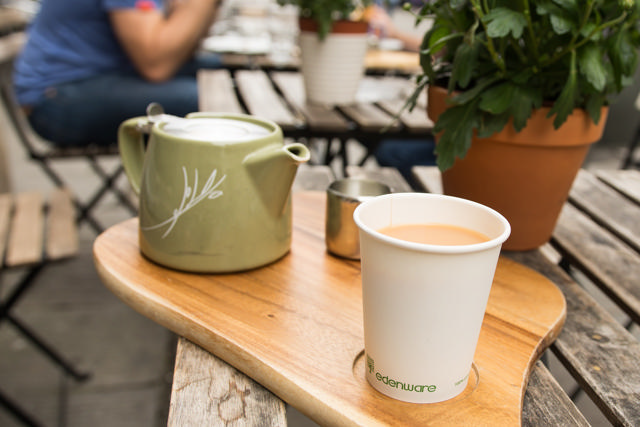
In recent years, paper cups with traditional plastic linings have started to be replaced with plant-based PLA linings. Edenware cups and accessories are designed to deliver reliable performance while supporting more responsible material choices.
Made from renewable sugarcane fibre and produced without added PFAS, the Edenware compostable cups range is certified for industrial composting. That means the products can be processed in the correct facilities rather than going to landfill.
Choosing compostable formats that can be handled by designated composting sites helps brands demonstrate lower impact and better waste outcomes than conventional single use plastics. While businesses must still report packaging volumes under EPR rules, using certified compostable products made from renewable resources strengthens sustainability reporting and waste strategies.
Suitable for cafés, offices, takeaway outlets and mobile vendors, the Edenware coffee cup provides sustainable packaging for coffee without compromising performance in busy, high turnover settings. Compostable cups and accessories also make sustainability commitments more visible to customers who increasingly expect low impact options.
Paper-based cutlery
Following plastic bans, a wide range of alternatives has entered the market. Paper based cutlery is one of the strongest performers. It offers a smoother texture, improved strength and no aftertaste, which addresses common user concerns.
Made from responsibly sourced paper and formed from multiple compressed layers, this cutlery is designed for rigidity and durability. When processed through the right facilities, it has the potential to be recycled and offers a lower impact option than conventional plastic.
Logistics
Alongside materials, catering and foodservice brands need to review logistics to ensure sustainability runs through daily operations.
Use one packaging supplier where possible
Working with a single packaging partner can reduce logistics impact across the supply chain. Fewer inbound deliveries, simpler ordering and more consolidated shipments all help cut emissions.
It also makes it easier to standardise recyclable or compostable formats and gather the packaging data needed for EPR reporting. A specialist supplier can advise on right sizing and material choice, which helps prevent over-packaging.
Efficient packaging formats
Review packing formats so more units fit per crate, pallet or vehicle. Stackable reusable crates and insulated containers can often replace single use outers where hygiene rules allow. This reduces packaging waste and transport volume at the same time.
Better waste reduction
Moving to reusable or certified compostable options such as the Edenware range reduces landfill waste and simplifies disposal at the point of use. Compostable formats are designed to handle food and drink residue, so users do not need to separate linings, lids and liquid contaminated parts.
This lowers the sorting burden for staff and customers, reduces recycling contamination and improves the likelihood that waste is processed through the correct food or compost streams. Using one compostable system across cups, lids and accessories also makes back of house waste handling more consistent.
Improved menu planning
Menu design also plays a role in sustainable catering. Increasing plant-based options lowers the carbon footprint linked to meat and dairy. Many operators now aim for at least 60 percent plant-based choices across core menus.
Ethical sourcing should also be considered. This includes Fairtrade coffee, free range or organic ingredients and sustainably sourced fish. Locally grown produce helps reduce food miles and supports regional suppliers.
Digital menus, QR codes and online ordering reduce print waste and remove constant reprint cycles when menus change. Digital ordering tools also improve forecasting and reduce over ordering, which cuts food waste and urgent top up deliveries.
Consider "closed-loop" services
More caterers are partnering with waste specialists to ensure compostable packaging such as Edenware is actually sent to industrial composting rather than general waste. This supports a more circular approach across the sector.
For other materials such as corrugated cardboard, closed loop schemes like Go-Recycle provide a simple and cost-effective way to recover old corrugated cardboard. Collecting cardboard during scheduled deliveries reduces extra transport, lowers cost and keeps materials in circulation, while supporting ESG reporting.
Summary checklist for caterers
Regulatory change and material innovation will continue to reshape sustainable catering through 2026.
The direction is positive, but the detail can be complex. Use this quick checklist as a guide:
- Audit hidden plastics in packaging, liners, labels and prep materials
- Remove single use plastic cups, lids and straws where alternatives exist
- Shift to reusable or certified compostable ranges for high waste items
- Match material to use: recyclable for clean dry goods and simple plastic formats, compostable for food soiled items
- Check your waste partner can actually process compostables and food packaging
- Make disposal routes clear with simple bin signage and on pack guidance
- Plan smarter delivery routes and consolidate orders to reduce transport impact
- Work with fewer suppliers and prioritise local sourcing where practical
- Review whether packaging suppliers can provide consolidated sustainable formats
- Use digital menus and ordering systems to cut print waste and over ordering
- Track packaging volumes and materials for EPR reporting needs
- Feature at least 60% plant-based menu options across core ranges
- Source ethical ingredients such as Fairtrade drinks and certified fish or meat
- Build menus around seasonal produce to reduce food miles and storage demand
Sustainable catering made easy with Go-Pak
At Go-Pak, we understand changing regulations and evolving expectations around sustainable catering. Our solutions are designed to help brands improve sustainability performance with confidence.
From closed loop services such as Go-Recycle to Edenware compostable cups and accessories, we support foodservice, cash and carry and retail sectors with practical packaging solutions.